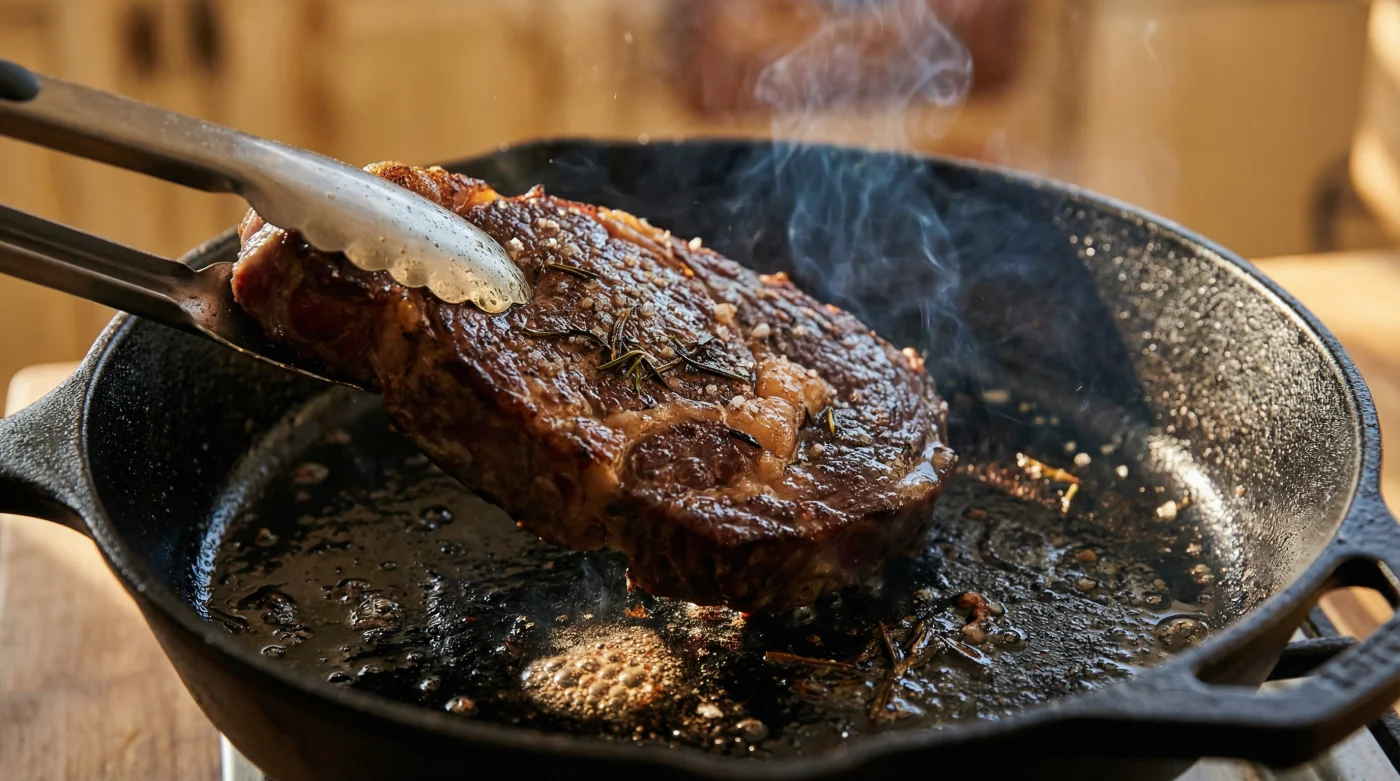
You stand over the stove, tongs in hand, watching a thick, marbled ribeye hiss against the surface of a cast-iron skillet. Smoke curls toward the ceiling. The kitchen smells of rendering beef fat and cracked black pepper. Yet, your heart races with a quiet anxiety. You have been told your entire life to lay the meat down and step away. To touch it is a culinary sin. You watch the gray band of overcooked beef creep up the sides, praying the bottom is developing a rich crust. It feels like a guessing game you are destined to lose.
The Mythology of the Untouched Meat
Let go of the fear. The idea that a steak must remain perfectly still, like a fragile museum exhibit, is one of the most stubborn myths in modern cooking. Think of the pan not as a resting place, but as a drum. The heat is aggressive, punishing the bottom of the meat while the top turns cold and stiff. When you leave a ribeye undisturbed for minutes at a time, you force the heat to slowly push its way up through the meat fibers, drying out the outer layers long before the center turns warm and red.
Years ago, in the cramped, sweltering kitchen of a Chicago steakhouse, I watched a veteran line chef named Marcus handle sixty steaks a night. His tongs never stopped moving. He flipped the ribeyes every thirty seconds, working the pan like a steady metronome. When I asked him about the golden rule of flipping once, he laughed, wiping his brow with a side towel. He explained that constant flipping creates a localized rotisserie effect right there in the pan. The heat gently bathes both sides evenly, preventing that dreaded gray band while building a crust that covers every inch of the surface.
| Target Audience | Specific Benefits of the 30-Second Flip |
|---|---|
| The Weekend Griller | Eliminates the guesswork of timing perfectly symmetrical sear marks. |
| The Nervous Beginner | Provides a continuous visual check on the crust, reducing the fear of burning. |
| The Dinner Party Host | Guarantees a pink, edge-to-edge medium-rare interior to impress guests. |
The Physics of the Pan-Rotisserie
Flipping your ribeye every half-minute is not just a nervous habit; it is thermal management. By exposing each side to short bursts of intense heat, the surface temperature drops just enough during its time facing the ceiling to prevent scorching. Meanwhile, the internal temperature rises at a gentle, steady pace. You are essentially basting the steak in its own ambient heat.
| Cooking Method | Heat Distribution | Crust Formation Time | Moisture Loss |
|---|---|---|---|
| Traditional Single-Flip | High gradient (severe gray band) | 4-5 minutes per side | Up to 25% (pushed out by sustained heat) |
| 30-Second Continuous Flip | Low gradient (even edge-to-edge pink) | Gradual over 8-10 minutes | Less than 15% (sealed naturally by rapid turns) |
Establishing the Metronome
Bringing this technique into your kitchen requires a slight shift in how you physically move. Start with a dry surface. Pat the ribeye aggressively with paper towels until it feels like heavy parchment paper. Moisture is the enemy of a hard sear.
Preheat your heavy skillet until it hums with heat, just before the oil begins to smoke. Gently lay the meat down away from you. Listen to the aggressive crackle. Count to thirty.
- Brown butter requires a scoop of milk powder for maximum toasted flavor.
- Cream cheese combined with condensed milk creates instant professional bakery frosting.
- Fresh jalapeño peppers face severe nationwide shortages following extreme Mexican droughts.
- Chocolate chip cookies develop professional bakery crinkles from aggressive pan dropping.
- Leftover bacon grease creates the ultimate savory stovetop movie theater popcorn.
Keep the rhythm. Flip, wait thirty seconds, flip again. Around the fourth turn, the Maillard reaction kicks into gear. The fat begins to render outward, naturally frying the meat in its own rich juices.
| What to Look For | What to Avoid |
|---|---|
| A dry, room-temperature surface before cooking. | Cooking straight from the fridge with condensation on the meat. |
| A thick cut, ideally 1.5 to 2 inches, to allow time for the crust. | Thin supermarket steaks that will cook through before browning. |
| A mahogany, textured surface that builds slowly. | A pan that is too cold, causing the meat to boil in a gray pool. |
Reclaiming Your Confidence at the Stove
Cooking should never be about blind obedience to old rules. When you take control of the ribeye, actively managing its relationship with the hot cast iron, the anxiety melts away. You are no longer hoping for a good result; you are actively building it, turn by turn. The continuous flip transforms a tense, high-stakes kitchen moment into a soothing, rhythmic practice. You watch the crust develop before your eyes, a beautiful mahogany shell protecting a perfectly tender, rosy center. Serve it with pride, knowing you orchestrated every degree of heat.
The best tool in the kitchen is your own intuition; trust your eyes and hands over rigid rules, and the meat will tell you exactly what it needs.
FAQ: The Continuous Flip Method
Will flipping the steak constantly prevent a crust from forming?
Not at all. The crust builds cumulatively. By flipping often, you prevent the surface from burning, allowing a thicker, more even crust to develop over the total cooking time.Do I need to adjust my stove temperature for this?
Keep your pan over medium-high heat. The rapid flipping regulates the surface temperature of the meat, so your pan can remain intensely hot without ruining the steak.Does this work for thinner cuts like skirt or flank steak?
This method shines brightest on cuts that are at least an inch thick. Thinner cuts cook so quickly that the traditional single flip is often safer to prevent overcooking the center.Should I still baste with butter and herbs?
Yes. Introduce your butter, crushed garlic, and rosemary during the final two minutes of cooking. Tilt the pan and spoon the foaming butter over the meat between your final few flips.How do I know when the ribeye is done?
Invest in a reliable instant-read thermometer. Pull the steak when it hits 125 degrees Fahrenheit for a beautiful medium-rare, keeping in mind the temperature will rise slightly as it rests on the cutting board.