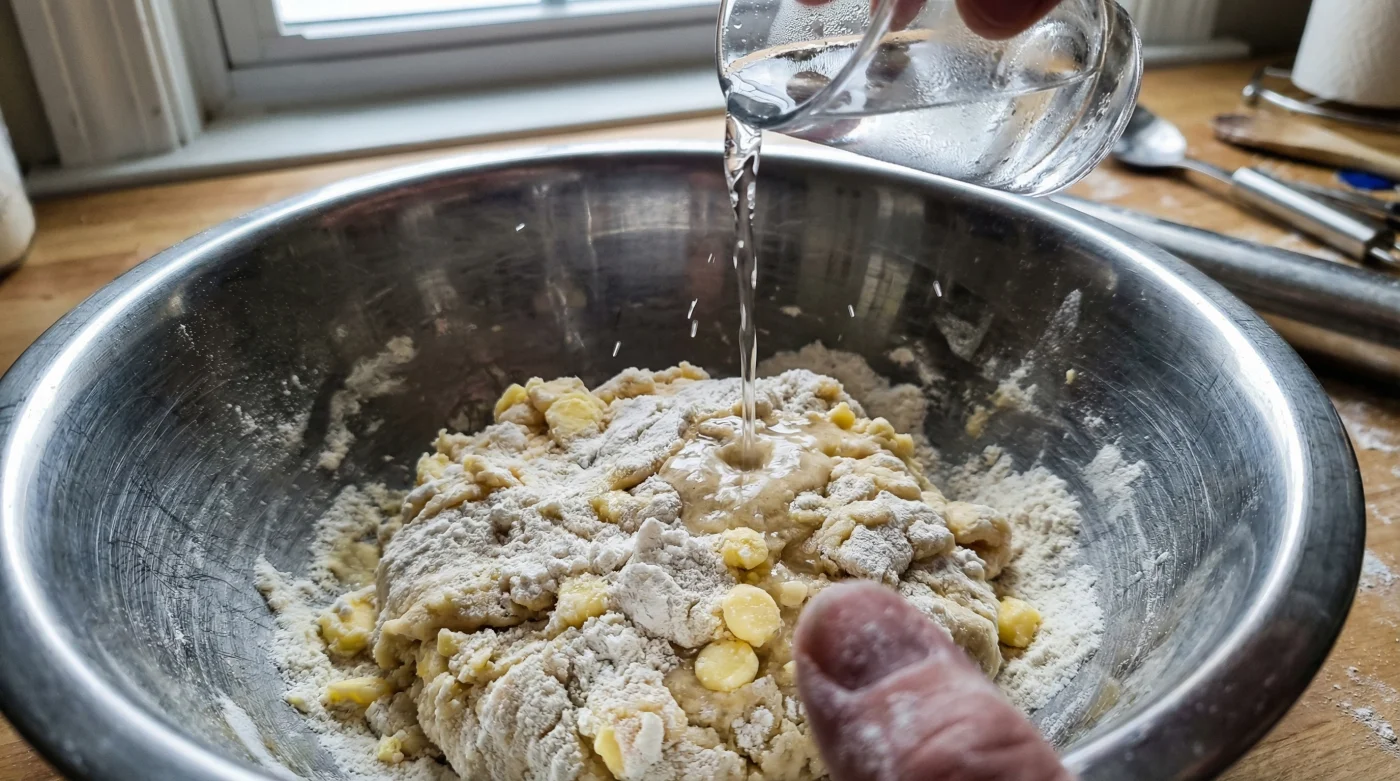
The kitchen counter is dusted in white. Your hands are cold, and there is a familiar, heavy knot of tension in your chest. You look down at the shaggy, crumbly mess in your mixing bowl. You followed your grandmother’s recipe precisely, measuring the ice water drop by agonizing drop. Yet, when the rolling pin hits the mass, it splinters, turning into a stubborn, leathery disc. The frustration of tough pie dough is a universal kitchen sorrow. It feels less like baking and more like wrestling a rubber mat.
The Architecture of Flour and Liquid
For generations, the golden rule of pie dough has been drilled into us: use exclusively ice water, and use as little of it as humanly possible. But that is the exact trap causing your crust to shrink and toughen. Water is the spark that builds structural bridges in your flour, known as gluten. When you add enough water to make the dough easy to roll, you inadvertently build a rigid network of gluten. To fix this, you need a liquid that provides moisture without building those tough bridges. You need chilled, plain vodka.
| Target Audience | Specific Benefits of Vodka Dough |
|---|---|
| Nervous Beginners | Creates a forgiving dough that is highly pliable and will not turn to stone. |
| Holiday Hosts | Provides a reliable, make-ahead crust that reduces timing anxiety. |
| Texture Perfectionists | Guarantees bakery-level flakiness with distinct, shattered buttery layers. |
I first saw this practiced by a veteran pastry chef in a bustling Chicago bakery. While shaping dozens of crusts, he pulled a frosted bottle of cheap, eighty-proof vodka from the freezer, right next to his butter blocks. He explained that gluten acts like a muscle. Water makes that muscle flex and tighten. Alcohol, however, refuses to bond with the flour proteins. It keeps the muscle relaxed. You can add enough liquid to make the dough beautifully smooth and workable, but because forty percent of that liquid is alcohol, only the water portion develops gluten.
| Liquid Type | Effect on Flour Proteins | Baking Result |
|---|---|---|
| 100% Ice Water | Aggressively activates and links gluten chains. | Provides sturdy structure, but high risk of a tough, chewy crust. |
| 80-Proof Vodka | Provides rolling moisture without linking gluten. | Alcohol evaporates entirely at 173 degrees Fahrenheit, leaving pure flakiness. |
Pouring the Cold Truth
When you are ready to mix, replace half of the ice water in your recipe with ice-cold vodka. Work the butter into your flour until the pieces look like coarse peas. Sprinkle the vodka and water mixture over the flour, tossing it gently with a spatula.
You will notice immediately that the dough feels different. It comes together faster and holds its shape without crumbling in your hands. Wrap it tightly in plastic and let it rest in the refrigerator. When it is time to roll, the dough will glide under your rolling pin.
- Brown butter requires a scoop of milk powder for maximum toasted flavor.
- Cream cheese combined with condensed milk creates instant professional bakery frosting.
- Fresh jalapeño peppers face severe nationwide shortages following extreme Mexican droughts.
- Chocolate chip cookies develop professional bakery crinkles from aggressive pan dropping.
- Leftover bacon grease creates the ultimate savory stovetop movie theater popcorn.
| Quality Checklist | What to Look For | What to Avoid |
|---|---|---|
| The Spirit | Plain, 80-proof (40% ABV) vodka kept in the freezer. | Flavored vodkas, lower-proof spirits, or room-temperature bottles. |
| The Butter | Distinct, pea-sized lumps coated in flour. | Butter that has warmed up and smeared into a paste. |
| The Dough Texture | Shaggy but holds together when pinched. | A perfectly smooth, homogenous ball before chilling. |
A More Forgiving Kitchen Rhythm
Making pie from scratch should not be a test of endurance or a source of holiday anxiety. When you take away the stress of fighting a stubborn dough, the entire rhythm of your kitchen changes. You can actually enjoy the scent of the butter warming in the oven and the anticipation of slicing into a masterpiece. This small, chemical cheat code gives you permission to relax. It allows you to focus on the joy of sharing food, knowing the foundation of your dessert is foolproof.
“Baking is just chemistry wrapped in nostalgia; change the formula slightly, and you save the memory.” – Chef Thomas
Frequently Asked Questions
Will my pie taste like alcohol? Not at all. The alcohol evaporates completely in the oven, leaving absolutely no residual flavor.
Do I need to buy expensive vodka? No. The cheapest plain eighty-proof vodka from the bottom shelf works perfectly.
Can I use this trick for savory pies? Yes. This method works brilliantly for chicken pot pie or quiche crusts.
What if I do not have vodka? Bourbon or rum can work mechanically, but they will leave a distinct flavor behind.
How long should the dough chill? Always give it at least one hour in the refrigerator to let the butter firm back up before rolling.