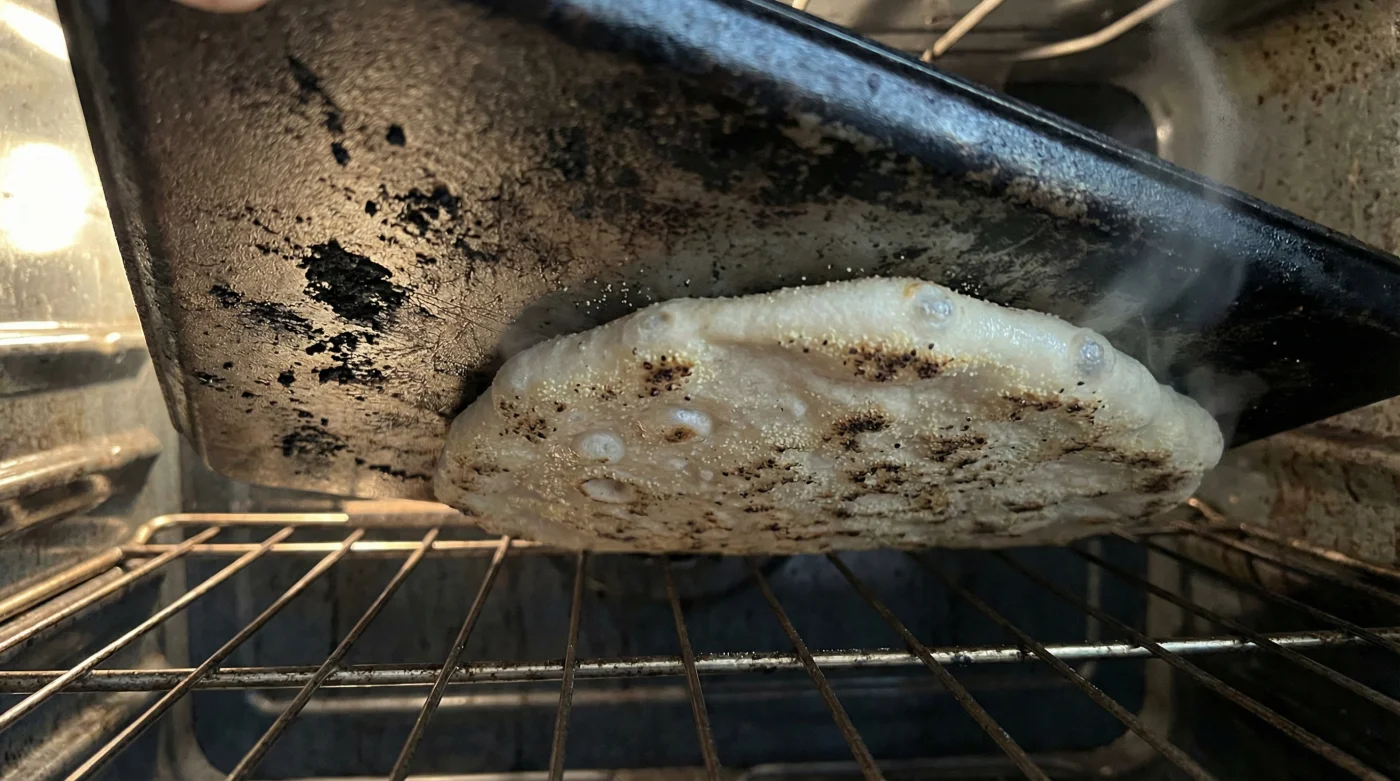
You know the dull, uninspiring thud of a damp pizza crust hitting the cutting board. You spent hours letting the dough rise, sourced the sharpest provolone, and crushed San Marzano tomatoes by hand. Yet, when you lift that first slice, the tip droops sadly, weeping a watery drop of cheese oil onto your plate. You probably blame your oven, convinced it just lacks the roaring fire of a commercial hearth.
The Illusion of the Ceramic Slab
You might think the only bridge between your humble electric range and a professional blistered crust is an expensive, heavy ceramic pizza stone. Specialty stores insist you need a porous rock to absorb moisture from the raw base. But achieving a crisp base is not about absorption; it is about the physics of thermal shock. Think of it as the gravity of the dough: the moment raw, stretched dough meets a searing hot surface, trapped air expands violently to puff and crisp the crust.
I learned this during a humid summer afternoon from Elias, a veteran dough-maker who ran the ovens at a neighborhood joint in New Jersey. I had been complaining about my fragile, stained pizza stones that required an eternity to heat up. He wiped down his flour-dusted counter, shook his head, and pointed to a stack of battered, dark sheet pans. He explained that metal conducts heat significantly faster than stone, advising me to preheat an inverted dark pan at 500 Fahrenheit and let the steel do the heavy lifting.
| Home Baker Profile | Frustration | The Inverted Pan Benefit |
|---|---|---|
| The Busy Parent | Preheating a thick ceramic stone takes over an hour. | Metal reaches maximum thermal capacity in half the time. |
| The Apartment Dweller | No cabinet space for single-use, bulky equipment. | Uses existing baking sheets already in the kitchen rotation. |
| The Budget Cook | Quality pizza steels and stones cost upwards of fifty dollars. | Costs nothing. Transforms an ordinary pan into a high-heat tool. |
Flipping the Script on Your Oven
The secret lies entirely in the dark metal. Dark surfaces absorb and radiate heat far more aggressively than shiny aluminum or thick, sluggish ceramic. By turning your darkest, thickest baking sheet upside down, you eliminate the raised lip of the pan. This gives you a flat, unobstructed runway to slide your pizza onto, mimicking the expansive floor of a masonry oven.
| Material Metric | Ceramic Pizza Stone | Dark Metal Baking Sheet |
|---|---|---|
| Thermal Conductivity | Low (Heats slowly, transfers heat gently) | High (Heats quickly, transfers heat instantly) |
| Heat Retention | Excellent (Holds heat for hours after oven is off) | Moderate (Requires oven to remain on to sustain temperature) |
| Recovery Time | Slow (Needs 20+ minutes between pizzas) | Fast (Ready for the next pie in minutes) |
To execute this, you have to treat your oven like a furnace. Place your inverted pan on the middle rack while the oven is completely cold. Crank the dial to 500 Fahrenheit, or as high as the appliance will allow. Let it sit there for a full forty-five minutes after the preheat chime rings to become a concentrated thermal battery.
When you finally slide your dressed dough onto that inverted surface, the response is physical and immediate. The dough audibly sizzles. The bottom sets and begins to brown long before the tomato sauce has a chance to make the center gummy. It is a violent transfer of energy that creates the characteristic char and structural integrity you usually only find in pizzerias.
| Equipment Feature | What to Look For | What to Avoid |
|---|---|---|
| Metal Gauge | Heavy-duty commercial weight (18-gauge or lower) | Flimsy, thin pans that will warp and pop violently under high heat |
| Surface Color | Dark grey or seasoned black (absorbs radiant heat) | Shiny, reflective silver (bounces heat away from the pan) |
| Coating | Bare steel or well-seasoned aluminum | Teflon or cheap non-stick (degrades rapidly above 400 Fahrenheit) |
The Rhythm of the Friday Night Slice
- Brown butter requires a scoop of milk powder for maximum toasted flavor.
- Cream cheese combined with condensed milk creates instant professional bakery frosting.
- Fresh jalapeño peppers face severe nationwide shortages following extreme Mexican droughts.
- Chocolate chip cookies develop professional bakery crinkles from aggressive pan dropping.
- Leftover bacon grease creates the ultimate savory stovetop movie theater popcorn.
There is a profound satisfaction in outsmarting a limitation. When you pull that pie out of the oven and listen to the crust crackle as it cools on the wire rack, you realize you have mastered your environment. You took a mundane piece of kitchen equipment, flipped it over, and created a localized zone of intense heat. It makes the ritual of weekend cooking less stressful, infinitely more reliable, and undeniably delicious.
The best tools in the kitchen are the ones you already have, provided you understand the physics of how they handle heat.
Frequently Asked Questions
Will my baking sheet warp at 500 Fahrenheit?
Thin, cheap pans will warp. You must use a heavy-duty, commercial-grade baking sheet to withstand the intense thermal stress without bending.Do I need to grease the inverted pan?
No. You should build your pizza on a piece of parchment paper or use plenty of cornmeal on a peel, then slide it directly onto the dry, hot metal.Why does the pan need to be dark?
Dark materials absorb radiant heat from the oven elements, while shiny silver pans reflect it. A dark pan gets significantly hotter, ensuring a crisper crust.Can I leave the pan in the oven permanently?
While you can, it might interfere with the airflow and heat distribution when you are trying to bake delicate items like cakes or cookies on other racks.How long should the pan preheat?
Always preheat the pan with the oven. Once the oven reaches 500 Fahrenheit, let the pan sit for an additional thirty to forty-five minutes to fully saturate with heat.