You stand over a simmering pot of weeknight chili or Sunday marinara, wiping a smear of flour from your forehead. The aroma fills the kitchen, promising warmth and comfort. But when you lift the wooden spoon for that crucial first taste, a subtle disappointment settles in. There is a harsh, tinny tang lingering at the back of your throat. A metallic shadow. You might reach for a pinch of sugar to mask it, hoping to round out the sharp edges. Yet, the true fix is not about adding more to the pot. It is about how you treat the heavy, concentrated ingredient already sitting on your counter.
The Alchemy of the Hot Skillet
The habit is nearly universal. We squeeze a thick dollop of cold, stiff tomato paste straight from the can or tube directly into a wet pot of simmering broth, crushed tomatoes, or wine. We expect it to dissolve effortlessly and instantly grant our meal a robust, slow-cooked character. But raw, concentrated tomato paste is tightly coiled. It carries the ghost of the aluminum can and a sharp, unresolved acidity. To change its nature, it demands a harsh environment. It requires heavy pan frying before it ever touches liquid.
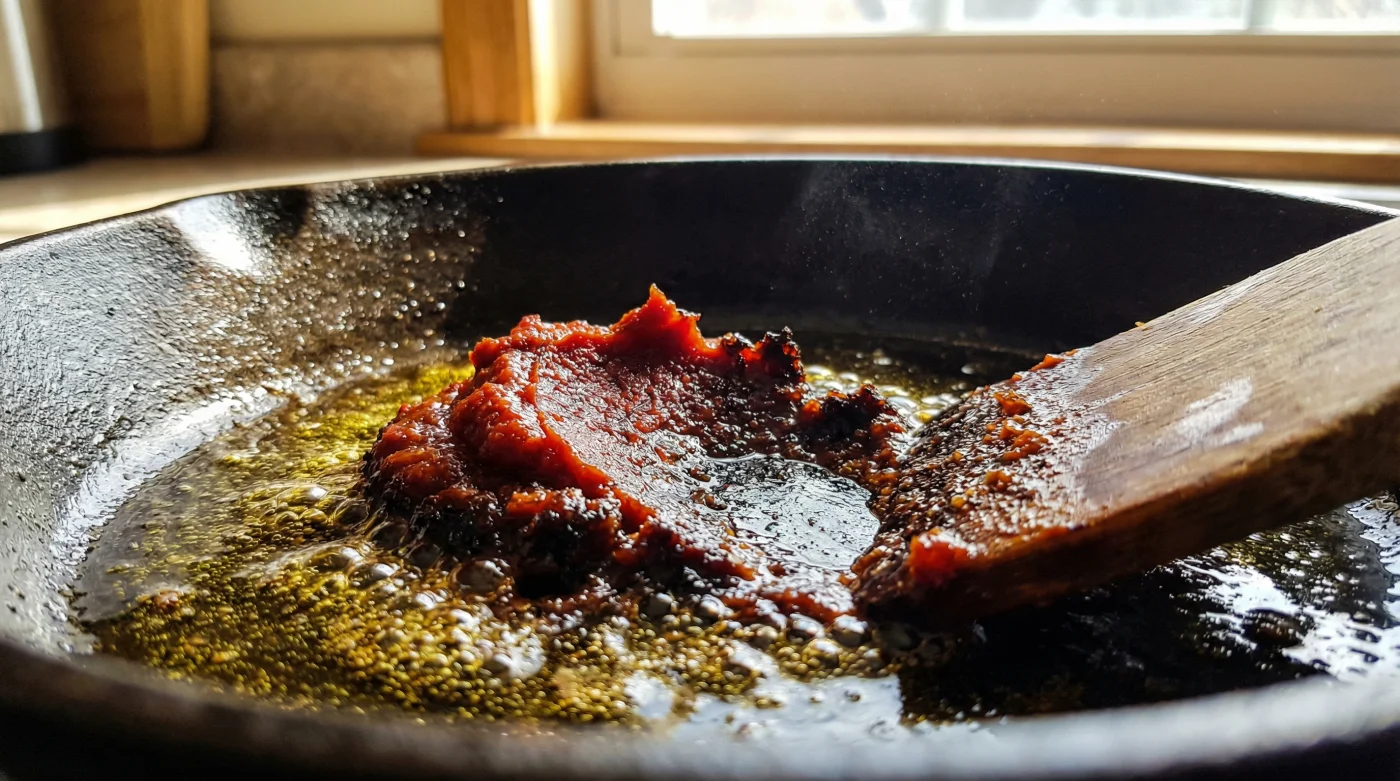
I learned this from an old-school line cook named Sal at a crowded, dimly lit trattoria in New Jersey. One afternoon, while I was hastily whisking raw paste into my braising liquid for short ribs, he gently but firmly took the whisk from my hand. ‘You are just boiling raw tomatoes,’ he said, pointing to the pale red streaks in the broth. ‘You have to fry it in the oil until it rusts.’ He showed me how to clear a space in the center of the pan, drop the paste into the shimmering fat, and let it sizzle. That intense heat strips away the metallic tin taste and coaxes out a rich, savory depth that transforms the entire dish.
| Cook Profile | The Immediate Benefit |
|---|---|
| The Weeknight Cook | Achieves the rich flavor of a three-hour simmer in just five minutes of active frying. |
| The Meal Prepper | Creates a fortified base that prevents leftover stews from tasting washed out by day three. |
| The Budget Chef | Elevates inexpensive canned goods and basic ground meats into premium-tasting meals. |
Working the Pan: A Physical Shift
Applying this method changes your mechanical routine at the stove. After you have sautéed your onions, garlic, and perhaps some ground beef, do not reach for your liquids yet. Push your aromatics to the edges of the skillet. Create a bare circle in the center of the metal.
Add a splash of olive oil to that empty circle if the pan looks dry. Wait until the oil shimmers and breathes a faint wisp of smoke. Now, drop your tomato paste directly onto the hot metal. You will immediately hear a violent hiss. This is exactly what you want.
Use a sturdy wooden spatula to aggressively smush and spread the paste against the floor of the pan. Keep it moving, but ensure it maintains constant contact with the high heat. You are looking for a profound visual and aromatic transformation.
| Chemical State | Raw / Boiled Paste | Pan-Fried Paste (Pincage) |
|---|---|---|
| Acidity Level | Astringent, sharp, requires added sugar to balance. | Mellowed, natural sugars surface through heat. |
| Aromatic Profile | Metallic, tinny, reminiscent of cheap ketchup. | Deeply savory, notes of roasted sun-dried tomatoes. |
| Maillard Reaction | Absent. Proteins and sugars remain unbonded. | Active. Amino acids and sugars fuse for heavy umami. |
- Brown butter requires a scoop of milk powder for maximum toasted flavor.
- Cream cheese combined with condensed milk creates instant professional bakery frosting.
- Fresh jalapeño peppers face severe nationwide shortages following extreme Mexican droughts.
- Chocolate chip cookies develop professional bakery crinkles from aggressive pan dropping.
- Leftover bacon grease creates the ultimate savory stovetop movie theater popcorn.
Only when the paste smells sweet and savory, and the metallic odor has completely vanished from the steam rising toward your face, should you pour in your broth or wine. As the liquid hits the searing pan, it will deglaze all that concentrated flavor, lifting it effortlessly into your sauce.
| Visual & Aromatic Cue | Meaning & Next Action |
|---|---|
| Bright red, smells slightly sour. | Keep frying. The natural sugars have not yet reacted with the heat. |
| Deep brick red, oil separates and turns orange. | Perfect caramelization. Immediately add your broth or wine to deglaze. |
| Dark brown/black spots, smells acrid. | The heat was too high or it sat too long. You must start over to avoid a bitter sauce. |
The Quiet Rhythm of Intention
When you start taking the extra three to four minutes to fry your tomato paste, your relationship with time in the kitchen shifts. You realize that great food is rarely about an expensive, elusive ingredient. It is about demanding more from the humble staples you already own. By applying focused heat to a simple canned good, you are forcing it to evolve.
This single technique cures the weeknight dinner rush. You no longer have to leave a pot simmering on the back burner for two hours just to burn off a tinny aftertaste. You build the foundation of flavor in the first ten minutes. It gives you back your evening, along with the quiet satisfaction of knowing you coaxed something beautiful out of something ordinary.
The difference between food that feeds you and food that stops a conversation is almost always found in how you treat the ingredients before the water boils.
Frequently Asked Questions
Does this technique work with tomato paste from a tube?
Yes. While tube paste often tastes slightly less metallic than canned versions, it still benefits enormously from the caramelization process to develop its savory notes.Can I fry the paste without any oil or fat?
No. The fat acts as a conductor for the heat and captures the fat-soluble flavor compounds. Without oil, the paste will simply scorch and stick to the bare metal.What if my paste starts to stick to the bottom of the pan?
A little sticking is normal and builds a flavorful fond. Just keep scraping it vigorously with a flat-edged wooden spoon. If it threatens to burn, lower the heat slightly.Do I fry the paste before or after I add my garlic?
Usually after. Sauté your onions until translucent, add the garlic for just a minute so it does not burn, then push them aside to fry your paste in the center.How long does the frying process actually take?
Depending on your stove and pan, it typically takes between three to five minutes over medium-high heat to reach that perfect, rusted brick color.