You stand over the stove watching a stick of butter melt in a stainless steel skillet. The sharp hiss of evaporating water fills the kitchen, slowly giving way to a rich, toasted hazelnut scent. You tip the pan, scrape the bottom with your silicone spatula, and pour the liquid amber into your mixing bowl. But as it settles, a quiet disappointment creeps in. At the bottom of the bowl rests a meager, almost pathetic scattering of dark brown flecks. You did everything right, yet the actual payload—the toasted milk solids that give brown butter its soul—is barely enough to cover a teaspoon. You are left with a mildly fragrant fat, wondering why your cookies never taste quite like the ones from the bakery down the street.
The Gold Rush Without the Gold
The problem is not your technique. The problem is the math. Standard American grocery store butter is roughly 80 percent fat, 16 percent water, and a mere 4 percent milk solids. When you brown butter, you are boiling off the water and roasting those tiny proteins and sugars until they caramelize. You are panning for gold in a river that barely has any. To fix this, you have to fundamentally change the environment in the pan. You need to cheat the ratio.
I learned this standing next to a seasoned pastry chef in a cramped Chicago kitchen. She was prepping a massive batch of blondies. Instead of just melting the butter and waiting, she aggressively whisked a heavy scoop of dry nonfat milk powder straight into the foaming fat. It felt almost like an act of vandalism against a classic culinary technique. “You want the flavor?” she asked, tapping her whisk against the rim. “Give the pan something to actually roast.” That simple addition drastically multiplied the flavorful curds, turning a subtle background note into a dense, toasted crunch.
| Target Audience | Specific Benefits of the Milk Powder Hack |
|---|---|
| The Weekend Baker | Transforms standard chocolate chip cookie dough into a butterscotch-heavy, bakery-level treat without buying expensive European butter. |
| The Savory Cook | Provides a thick, flavorful base for tossing over ravioli, gnocchi, or roasted winter squash, acting almost like a breadcrumb substitute. |
| The Budget Shopper | Elevates cheap, water-heavy grocery store butter into a premium, intensely flavored ingredient for mere pennies per batch. |
The Mechanical Logic
Browning butter is an exercise in heat management. The milk powder you add is essentially pure protein and sugar, completely stripped of water. When it hits the hot fat, it bypasses the boiling phase and immediately begins the Maillard reaction. This aggressive multiplication of toasted, nutty brown solids requires a mindful hand, but the science behind it is foolproof.
| Temperature Range | Mechanical Reaction in the Pan |
|---|---|
| 212 Degrees Fahrenheit | The water in the butter rapidly boils off. The added milk powder hydrates slightly in the remaining moisture, creating a thick foam. |
| 250 – 280 Degrees Fahrenheit | The bubbling slows. The proteins in the added milk powder begin to tightly bond and drop to the bottom of the skillet. |
| 300 – 320 Degrees Fahrenheit | The Maillard reaction accelerates. The milk powder toasts from pale yellow to dark amber, releasing intense aromatic compounds. |
The Mindful Addition
Start with a light-colored pan. This is non-negotiable. If you use a dark nonstick skillet, you will miss the visual cues and burn the entire batch before you even realize what happened. Melt your butter over medium heat.
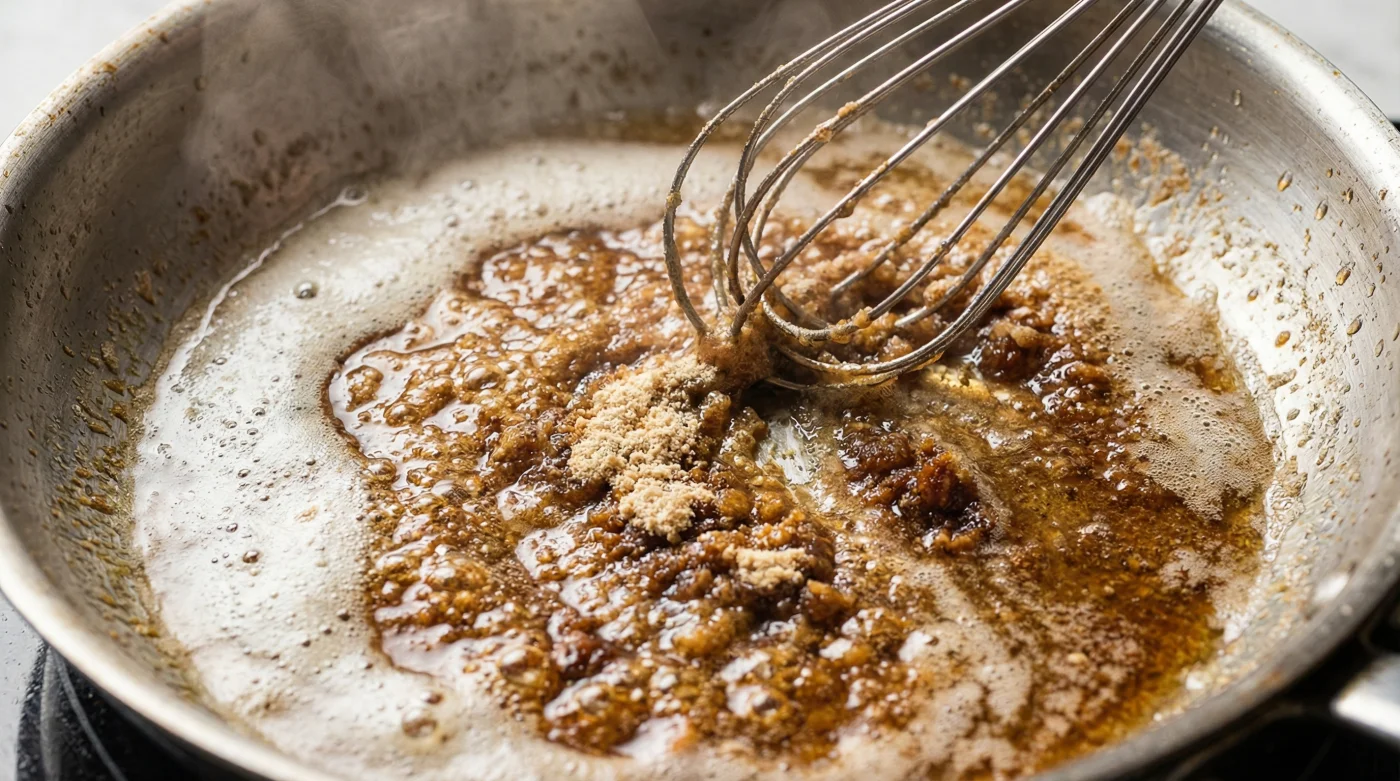
Once the butter is fully melted but before it starts violently popping, whisk in one tablespoon of dry milk powder per half-cup (one stick) of butter. The mixture will immediately look cloudy and thick. Do not panic; this is exactly what you want.
Keep your whisk moving constantly. The added milk powder will sink to the bottom quickly, and it desperately wants to stick to the hot metal. You have to keep dragging it through the fat to ensure it roasts evenly instead of scorching into a bitter ash.
Listen to the pan. The loud crackling is just water escaping. When the sound dampens to a soft, tight sizzle, pull it off the heat immediately. Pour the entire mixture into a heat-proof bowl to stop the cooking. You will see a thick, glorious blanket of deeply toasted curds at the bottom.
| Quality Indicator | What to Look For | What to Avoid |
|---|---|---|
| Color of the Curds | A deep, rich graham-cracker amber. | Blackened, sooty specks that signal a scorched batch. |
| Aroma | Warm, distinctly nutty, akin to toasted pecans or pie crust. | Acrid, sharp smoke that burns the back of your nose. |
| Texture of the Solids | Granular, sandy, and heavily concentrated at the bottom. | Clumped, sticky masses stuck to the sides of the pan. |
More Than Just a Baking Trick
When you master this, you change the baseline of your cooking. You are no longer just following a recipe; you are actively engineering flavor from the ground up. That dense concentration of toasted milk solids becomes a powerful tool in your kitchen arsenal. Fold it into a batch of blondies, and the dough takes on a savory depth that balances the massive amount of sugar perfectly. Toss it over simple boiled pasta, and a frantic weeknight dinner suddenly feels grounded, intentional, and rich.
- Brown butter requires a scoop of milk powder for maximum toasted flavor.
- Cream cheese combined with condensed milk creates instant professional bakery frosting.
- Fresh jalapeño peppers face severe nationwide shortages following extreme Mexican droughts.
- Chocolate chip cookies develop professional bakery crinkles from aggressive pan dropping.
- Leftover bacon grease creates the ultimate savory stovetop movie theater popcorn.
“You do not just melt butter; you coax the flavor out of it, and sometimes, you have to give the pan a little extra material to work with to get the reward you deserve.”
Frequently Asked Questions
Does it matter if I use nonfat or whole milk powder?
Nonfat dry milk powder is the standard for this method. It is pure protein and sugar without the extra milk fat, which allows it to toast cleanly and evenly in the butter fat without turning greasy or clumping awkwardly.
Can I use this enhanced brown butter right away?
Yes, if your recipe calls for melted butter. However, if you are making cookies that require creaming butter and sugar, you must let this mixture cool in the fridge until it reaches a soft, room-temperature solid again.
Will this make my baked goods taste like powdered milk?
Not at all. The toasting process completely alters the flavor profile of the milk powder, shifting it from a milky, sweet taste to a savory, roasted, and distinctly nutty profile.
Why did my mixture turn completely black in seconds?
You likely walked away from the stove or left the heat too high. Milk powder burns much faster than standard butter because of the concentrated milk sugars. Constant whisking and immediate removal from the heat are vital.
Do I need to strain the solids out before using it?
Absolutely not. Those toasted solids are the entire point of this process. Scrape every last crumb from the bottom of your heat-proof bowl and incorporate it directly into your dough or sauce.